Speaker
Keynote Speakers: | Title:Bayesian modeling in neuroimaging: Brain networks' dynamics | | 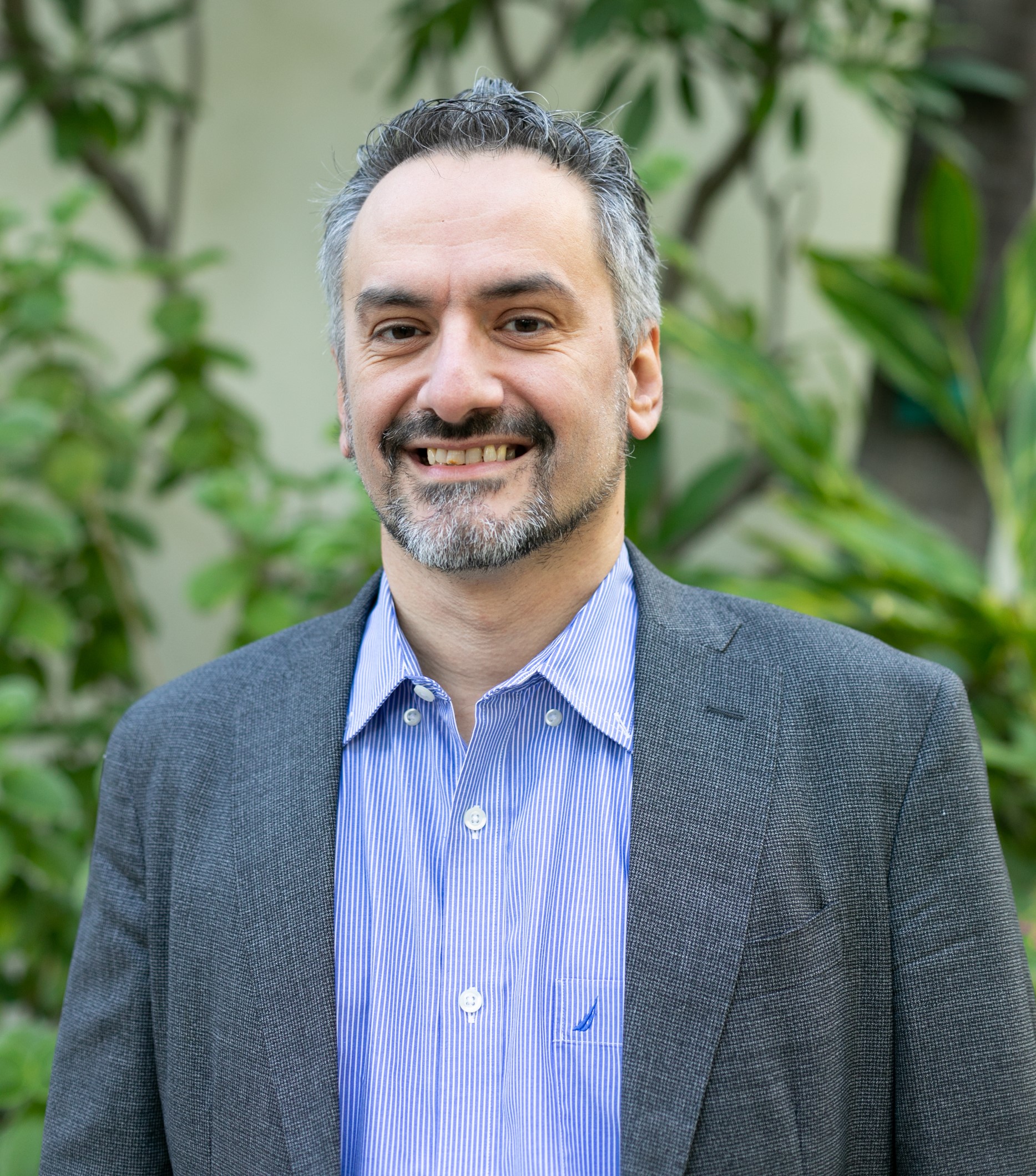
Micnele Guidani | Introduction:
Michele Guindani is a Full Professor of Biostatistics at UCLA. He is a Fellow of the ASA and ISBA, and an elected member of the ISI. He served as President of ISBA in 2025 and is currently the Past President and a member of the Executive Council. He served as the Editor-in-Chief of Bayesian Analysis from 2018 to 2021 and currently holds several editorial roles across leading journals in statistics and biostatistics, including JASA, Biometrics, Econometrics and Statistics, Nature Medicine, Statistics and Data Science in Imaging, and, starting in May 2026, Computational Statistics & Data Analysis. His research focuses on Bayesian and nonparametric methods for complex biomedical data, especially neuroimaging, dynamic brain connectivity, imaging genetics, microbiome studies, and related high-dimensional inference problems. | Abstract:
Brain imaging data, particularly functional magnetic resonance imaging (fMRI), exhibit complex spatial and temporal correlations. We begin by highlighting the critical role of statistical approaches in the analysis of such data. More specifically, we discuss methods for studying dynamic brain connectivity, with the goal of understanding how interactions among brain regions change over time.
We present two recent Bayesian approaches for modeling these dynamic relationships in multivariate time series data. First, we describe a scalable Bayesian time-varying tensor vector autoregressive (TV-VAR) model that efficiently captures evolving connectivity patterns. This approach uses a tensor decomposition of the VAR coefficient matrices across different lags, together with sparsity-inducing priors, to represent dynamic connectivity in a flexible yet parsimonious way.
Next, we introduce a Bayesian framework for sparse Gaussian graphical modeling based on discrete autoregressive switching processes. This method improves the estimation of dynamic connectivity by modeling state-specific precision matrices and incorporating novel prior structures that account for both temporal and spatial dependence.
Throughout the talk, we illustrate the performance of these Bayesian methods using examples from simulation studies and real fMRI data.
| | Title:Scalable Inference and Computation for Network Data | | 
Yuguo Chen | Introduction:
Yuguo Chen received the Ph.D. degree in statistics from Stanford University in 2001. He is a Professor and Chair in the Department of Statistics, and Director of Illinois Statistics Office, University of Illinois Urbana-Champaign. He is also affiliated with Coordinated Science Laboratory, and Information Trust Institute. His research interests include network data analysis, machine learning, statistical computing, Monte Carlo methods, and psychometrics. He is a fellow of the American Statistical Association, Institute of Mathematical Statistics, and an elected member of International Statistical Institute. He is a recipient of the Data Science Founder Professorial Scholar and Arnold O. Beckman Award. He is currently serving as the co-Editor for Journal of Computational and Graphical Statistics. | Abstract:
Network structures arise in modeling a wide variety of systems inscience and engineering. Analyzing such data remains challenging due to their scale, complex dependence structures, and often dynamic and heterogeneous nature. In this talk, we discuss recent advances in scalable inference and computation for network data,focusing on computational challenges in large-scale settings across a range of network models, illustrated through representative network inference problems.
| Banquet Speaker:
| Title:A Forward-Looking View of Bayesian Statistics: Research, Publishing, and Community | 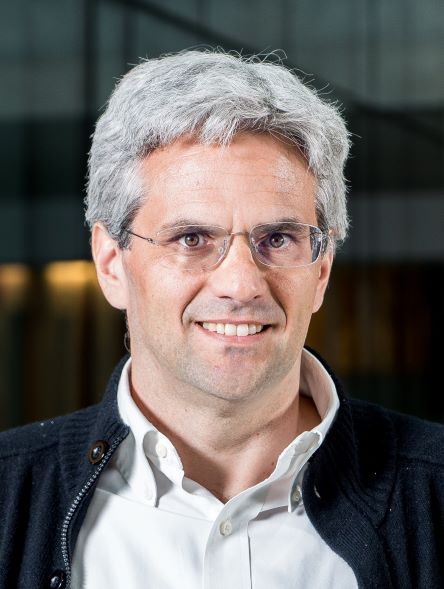
Igor Pruenster | Introduction:
Igor Pruenster is Professor of Statistics at Bocconi University, where he previously served as Founding Director of the Bocconi Institute for Data Science and Analytics (BIDSA). Before joining Bocconi, he held faculty positions at the Universities of Torino and Pavia. He is a Fellow of the ASA, IMS, and ISBA, and former President of ISBA. He serves as Editor-in-Chief of Bayesian Analysis and Associate Editor of The Annals of Statistics. His research focuses on Bayesian nonparametrics,probabilistic machine learning, mixture models,predictive inference,and applied probability. | Abstract:
Bayesian statistics plays a central role in modern data science, with ongoing work spanning theory, methodology, computation, and applications. At the same time, the field faces a rapidly changing landscape, raising important questions about what counts as progress and how the community should position itself.
In this talk, I offer a forward-looking view of Bayesian statistics, connecting research, publishing, and community. I argue that the core challenges of statistical science, modeling complex dependence, quantifying uncertainty, and supporting reliable decisions, continue to define the field. Bayesian methods provide a principled framework to address them. This is particularly relevant for current AI developments, where progress has been driven mainly by large-scale optimization, often with limited attention to uncertainty, structure, and linking inference to decisions. For AI to move from impressive to reliable, these aspects become essential.
I also discuss recent trends in "Bayesian Analysis", drawing on submission patterns and editorial experience, and comment on what characterizes strong contributions in terms of clarity, positioning, and originality. I then consider the role of ISBA in strengthening the global Bayesian community, with particular attention to engagement in East Asia. The ISBA East Asia Chapter, established in 2016, has played a central role in building and consolidating the Bayesian community in the region, and is a clear success story.
|
|